Mold Removal in Hallandale Beach, FL
Along Golden Isles Drive and Three Islands Boulevard, Hallandale Beach is a city of condo towers. Golden Surf Towers, fifteen stories at 137 Golden Isles Drive, went up in 1971, and many of its neighbors date from the same era. In buildings that age, the risers, the stacks, and the roof membrane have all been repaired more than once, and each repair is a place water can find its way in.
Living in a tower means mold rarely starts in your own unit. A leak from the unit above, a sweating chilled water line in the ceiling, or a window frame that lost its seal in a storm can all show up as a stain on your wall. Salt air on the coast speeds up corrosion on anything metal in the walls.
Hallandale Beach owners who call this site are matched with an independent mold provider who works in the city. The provider inspects the unit and lays out what should happen. This site only sets up the call.
Requests typical of Hallandale Beach units
Because the source is often outside the unit, a mold inspection that documents moisture paths comes before anything else. Where a window or slider leaked during a storm, mold removal of the affected drywall is the usual next step. When the association or an insurer wants a written result, post-remediation verification by a party other than the remediator carries more weight.
Condo association rules, water, and permits
In a Florida condo, the association generally maintains common elements like the roof, exterior walls, and shared plumbing lines, while unit owners handle interior drywall and finishes. Check the declaration and get the association's position in writing before work begins.
Hallandale Beach runs its own water plant, first built in 1951 and rebuilt around nanofiltration in 2008; the Utilities Division maintains 81 miles of water lines. Permits for rebuild work go through the Building Division at 400 South Federal Highway, with online filing through the HBePermitting portal.
Call (000) 000-0000 to be connected with a local mold provider serving Hallandale Beach.
Services Available in Hallandale Beach
Mold Inspection
A visual inspection with moisture readings to find the source, the extent, and whether testing is needed.
Mold Removal
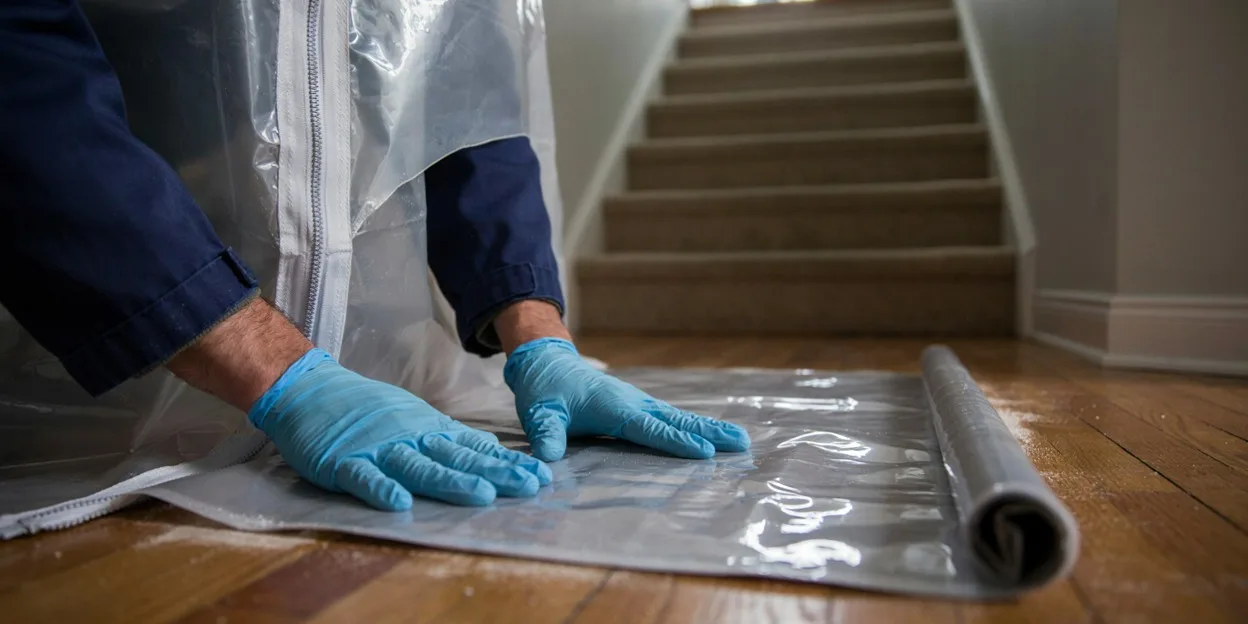
Containment, negative air, HEPA filtration, and removal of affected drywall, trim, and insulation, then cleaning and drying.
Mold Testing and Air Sampling
Air and surface samples sent to a lab, done by a licensed Florida mold assessor separate from the remediator.
HVAC Mold Cleaning
Air handler, coil, and duct cleaning when the smell shows up every time the air conditioning runs.
Attic Mold Remediation
Roof-deck and truss mold from roof leaks, blocked soffits, or ducts sweating in a hot attic.
Bathroom Mold Removal
Mold in drywall, ceilings, grout, and behind vanities from steam and slow leaks, the most common first call.
Post-Remediation Verification
Clearance testing after the work by a separate assessor, so you have paperwork for a sale, a tenant, or an insurer.
Black Mold Removal
Heavier dark growth handled with full containment and protective gear. Color does not identify the species, and the process does not change.