Mold Removal in Pembroke Park, FL
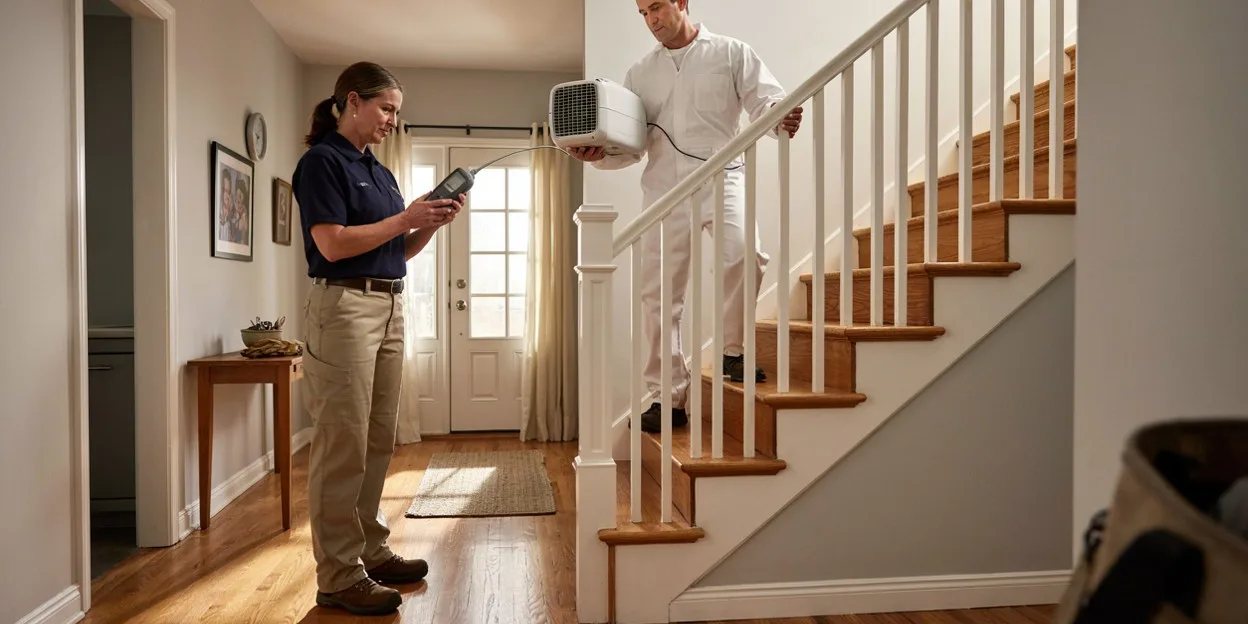
Pembroke Park is a small town with seventeen mobile home parks inside its borders, four of them set up for RV camping. Dale Village on SW 27th Court is one of the all-ages communities. A manufactured home has its own mold pattern: a shallow crawl space under the floor, a belly wrap that traps water when the plumbing leaks, and thin wall cavities that wet through fast.
The town sits on the Miami-Dade line at low elevation, and it takes the same summer humidity and storm rain as the rest of south Broward. A window unit or a small split system in a mobile home runs hard all summer and drips condensate right where the floor is weakest. When the floor goes soft near a bathroom, the moisture has usually been there a while.
Homeowners in Pembroke Park, whether the home is on a slab or on piers, are connected by this site with an independent local mold provider. The provider does the inspection and the work. This site is only the phone line between you.
The Pembroke Park request list
A small bathroom with a soft floor around the toilet is the usual reason for bathroom mold removal, and the provider looks under the floor as well as at the wall. Wet wall panels and insulation after a plumbing leak call for mold removal that reaches into the cavity. Homes cooled by a central system with ducts under the floor or in a small attic ask for HVAC mold cleaning when the smell rides the air.
Town permits for manufactured homes, and county water
The Town of Pembroke Park Building Department at 3150 SW 52nd Avenue keeps its own checklist for manufactured home work, and permit records on a lot go back to 1988 in the town's online system. Repairs that touch plumbing, electrical, or the structure of a manufactured home go through that office.
Water in Pembroke Park is billed by Broward County Water and Wastewater Services, not the town, so a suspected leak on the meter side starts with the county at 954-831-3250. In a mobile home park, the line from the meter to the home may be the park's responsibility or yours; the lot lease says which.
Call (000) 000-0000 to be connected with a local mold provider serving Pembroke Park.
Services Available in Pembroke Park
Mold Inspection
A visual inspection with moisture readings to find the source, the extent, and whether testing is needed.
Mold Removal
Containment, negative air, HEPA filtration, and removal of affected drywall, trim, and insulation, then cleaning and drying.
Mold Testing and Air Sampling
Air and surface samples sent to a lab, done by a licensed Florida mold assessor separate from the remediator.
HVAC Mold Cleaning
Air handler, coil, and duct cleaning when the smell shows up every time the air conditioning runs.
Attic Mold Remediation
Roof-deck and truss mold from roof leaks, blocked soffits, or ducts sweating in a hot attic.
Bathroom Mold Removal
Mold in drywall, ceilings, grout, and behind vanities from steam and slow leaks, the most common first call.
Post-Remediation Verification
Clearance testing after the work by a separate assessor, so you have paperwork for a sale, a tenant, or an insurer.
Black Mold Removal
Heavier dark growth handled with full containment and protective gear. Color does not identify the species, and the process does not change.